The next five years
Five years. One companion that grows with them.
Everything in Brightr is keyed to your child’s age in weeks — so what you see in month four is not what you saw in week two, and you never have to go hunting for the bit that applies to you.
3:14am. Everyone else is asleep.
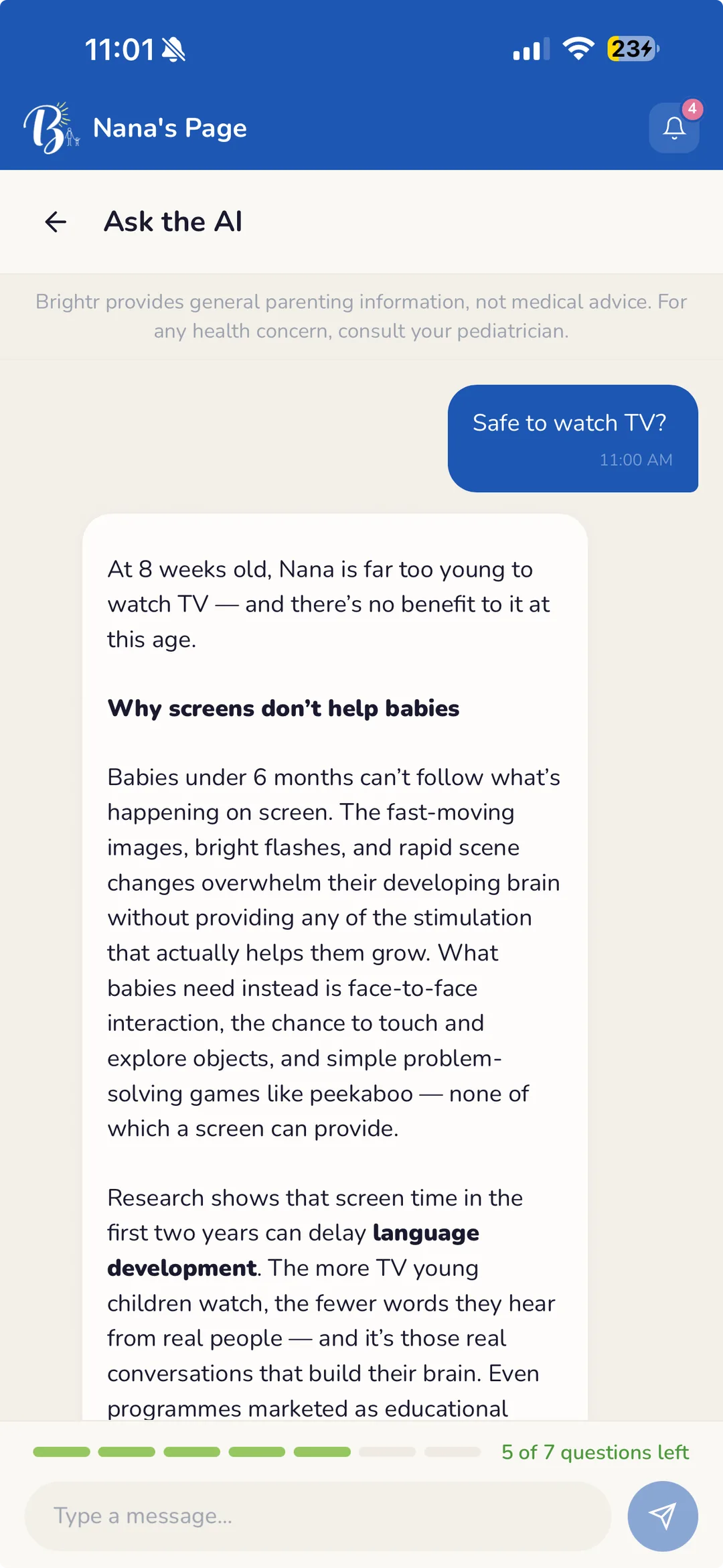
Ask the thing you’d never say out loud.
Brightr already knows how old your child is, what you logged yesterday, and what you asked last week. So the answer comes back about your actual baby — not a forum thread from 2011.
- Grounded in paediatric guidance, not guesswork
- Remembers your child’s age and history
- Points you to a doctor first when it matters
Every morning, before the day starts
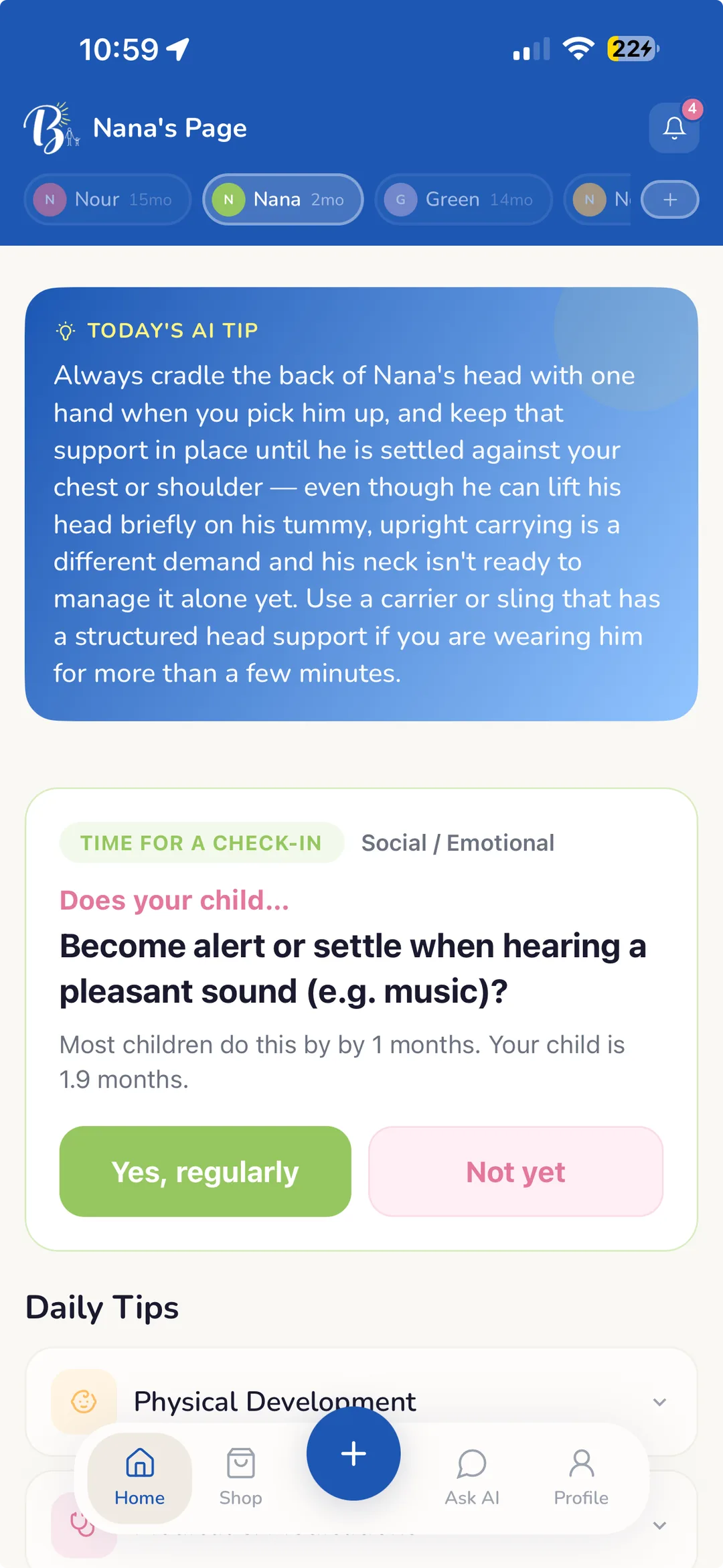
One useful thing, for the week you’re actually in.
Not a milestone chart for the whole first year. The specific week: what’s changing, what’s normal, what helps tonight. It arrives at 8am in your timezone — not ours.
- 312 weeks of age-matched guidance
- Milestones, practical steps and a parents’ report
- Free, forever, on every plan
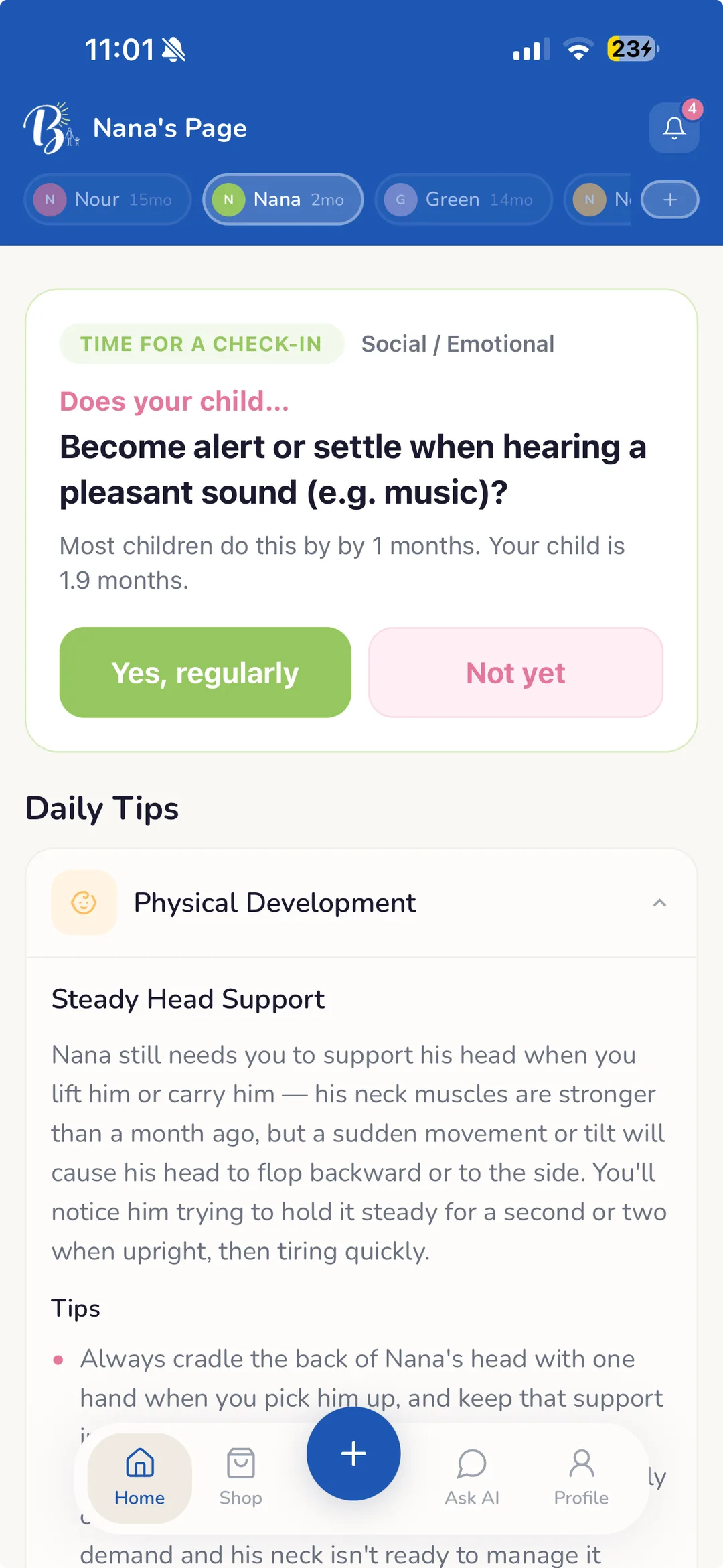
One arm holding a baby, one thumb free
Two taps. Then put the phone down.
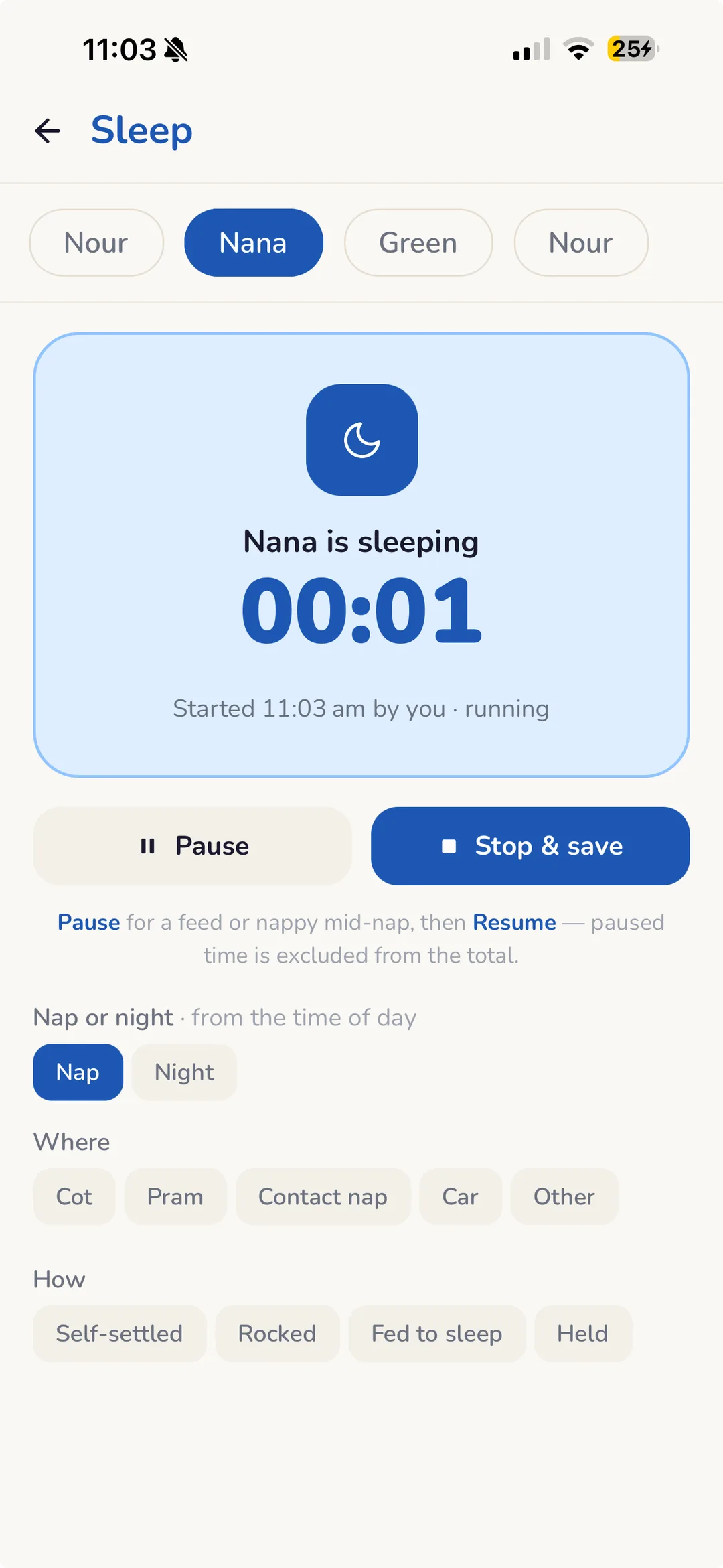
Sleep, feeds, nappies, temperature, medicine. Start a timer and it keeps counting on your lock screen, so you’re not unlocking anything at 4am to check how long they’ve been down.
- Live timers, right on the lock screen
- Six trackers, one shared history
- Your partner sees it the second you log it

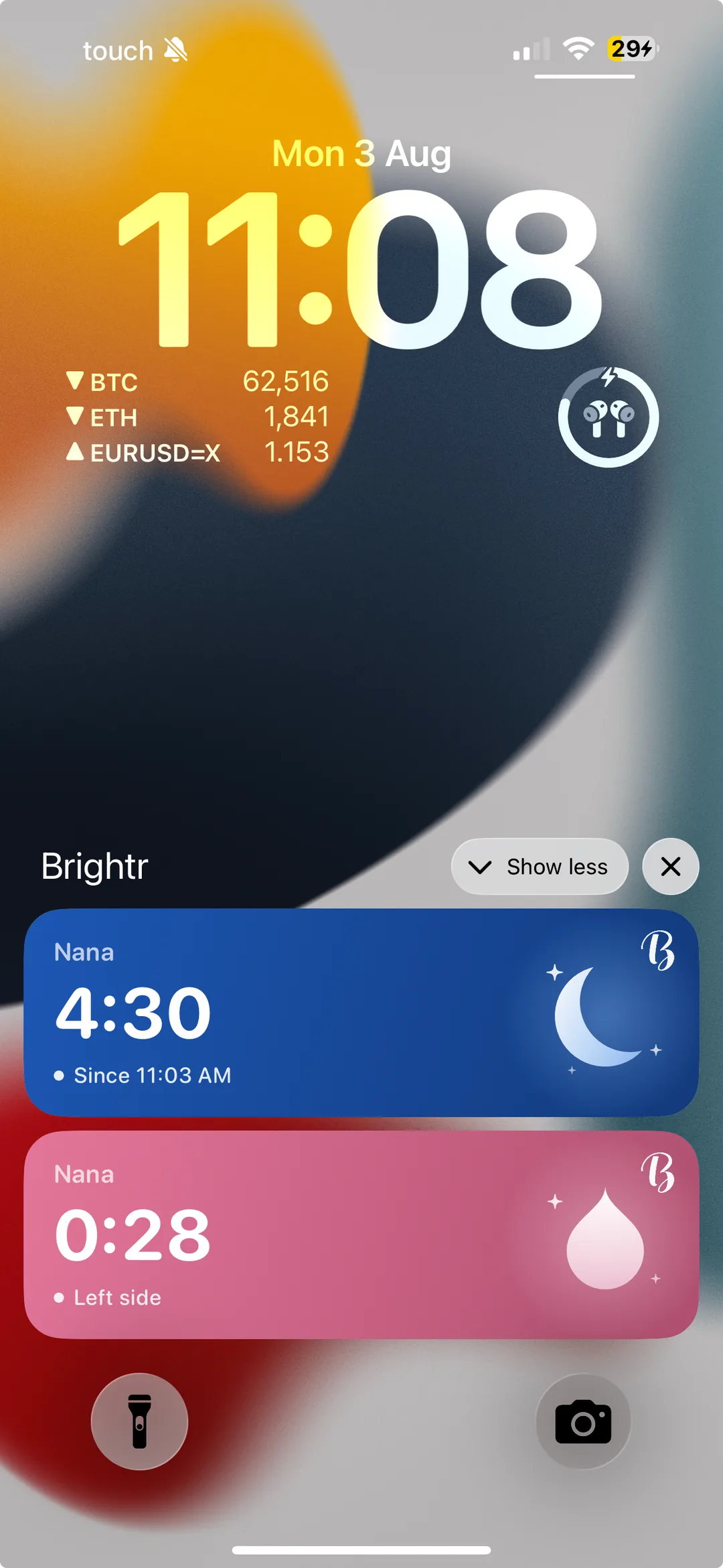
Still counting, screen locked.
A nap and a feed, both running at once, straight on the lock screen.
The week after the health visitor’s appointment
See the pattern, not just today’s number.
Weight, length and head circumference plotted against WHO growth standards. Wake windows that stretch as they grow. Tonight’s bedtime, worked back from this morning’s wake-up.
- WHO percentile curves, birth to five
- Wake windows that shift with age
- Sleep, rise and bedtime guidance
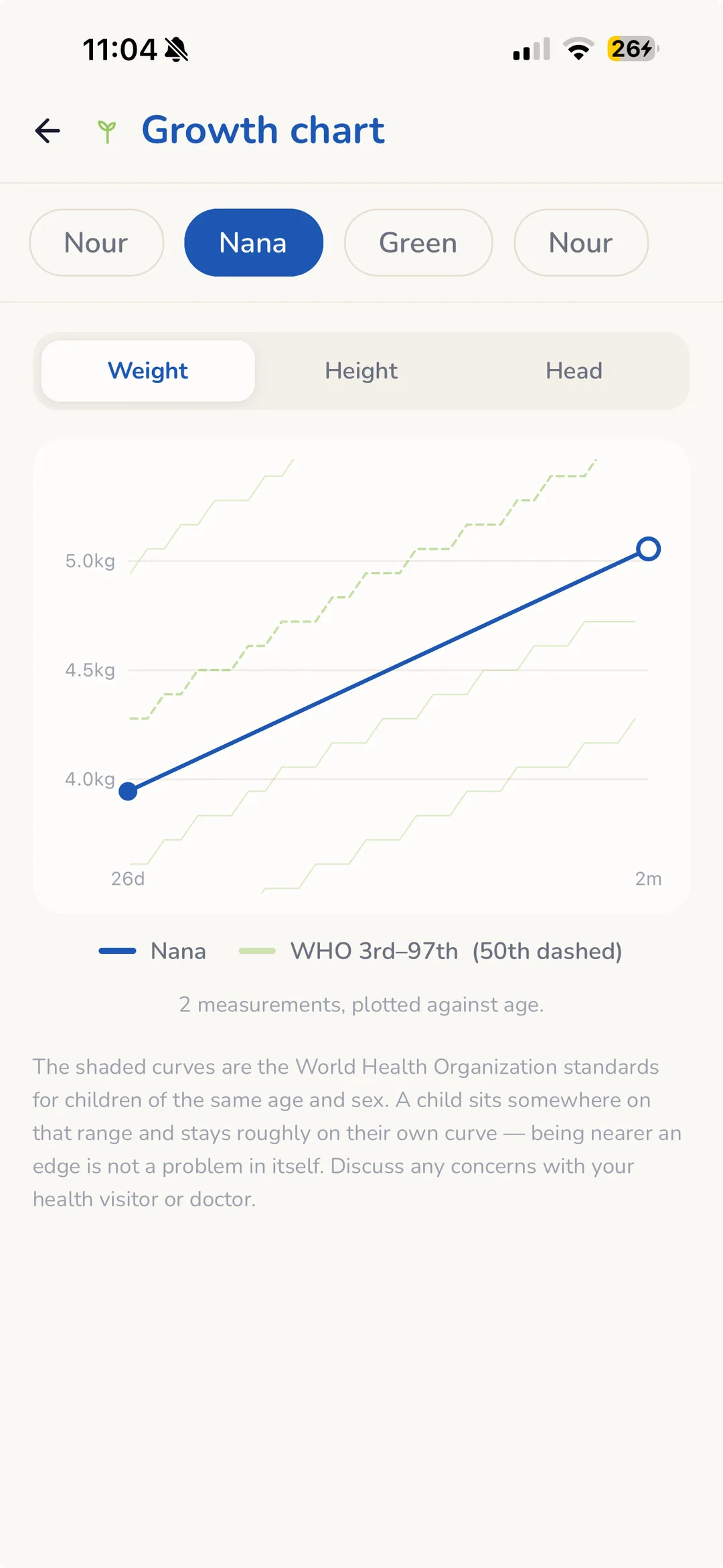
The thought you have at every birthday
Stop wondering whether they’re on track.
A gentle read across movement, language, social and play. No score, no percentile ranking against other people’s children — just what to look for next, and when something is genuinely worth mentioning.
- Movement, language, social and play
- What to look for next month
- No scores. No league tables.
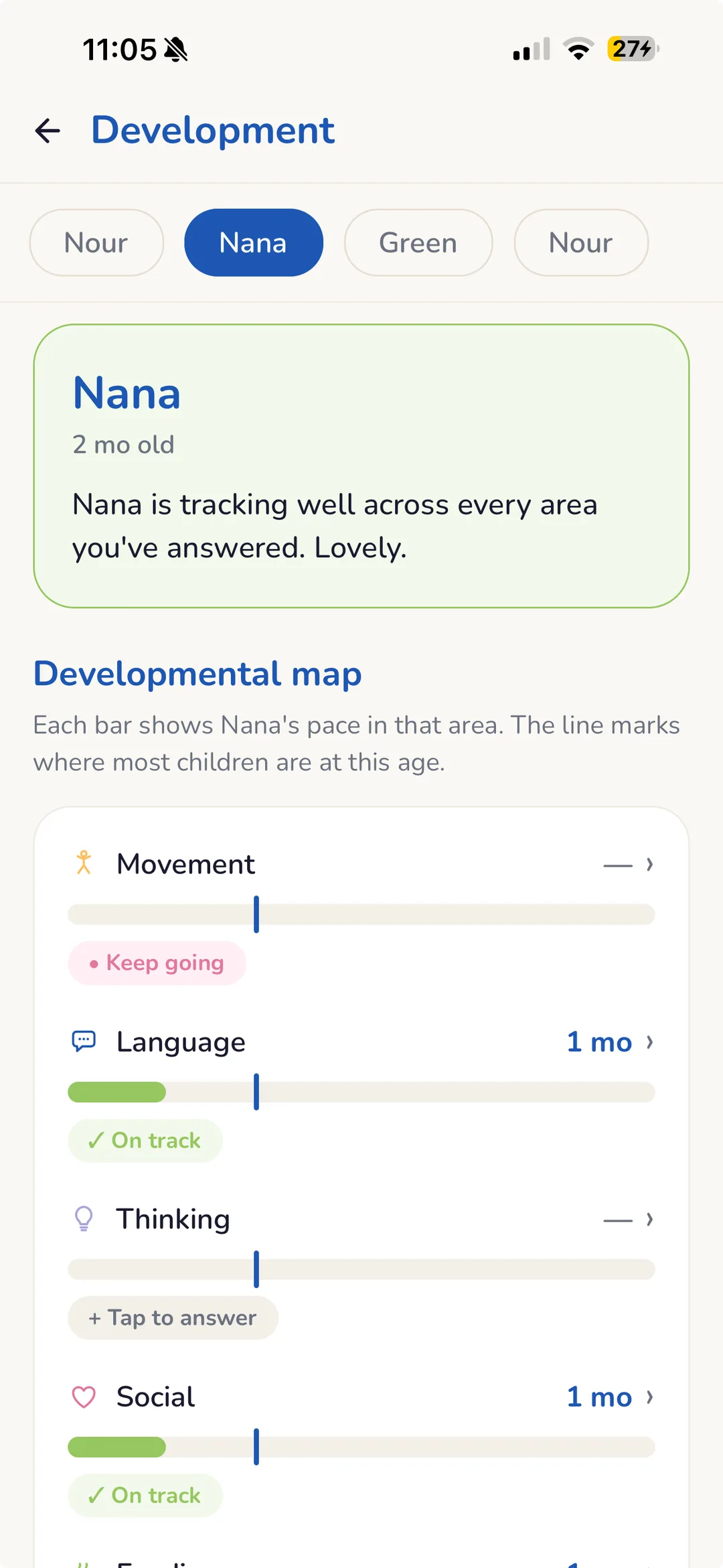
Rolling, sitting, crawling, cruising — and what usually comes next.
Babbling to first words to two-word phrases, at their own pace.
Eye contact, smiling, stranger awareness, sharing attention.
Cause and effect, pretend play, problem-solving with objects.
Because you are not doing this alone
Bring in your people.
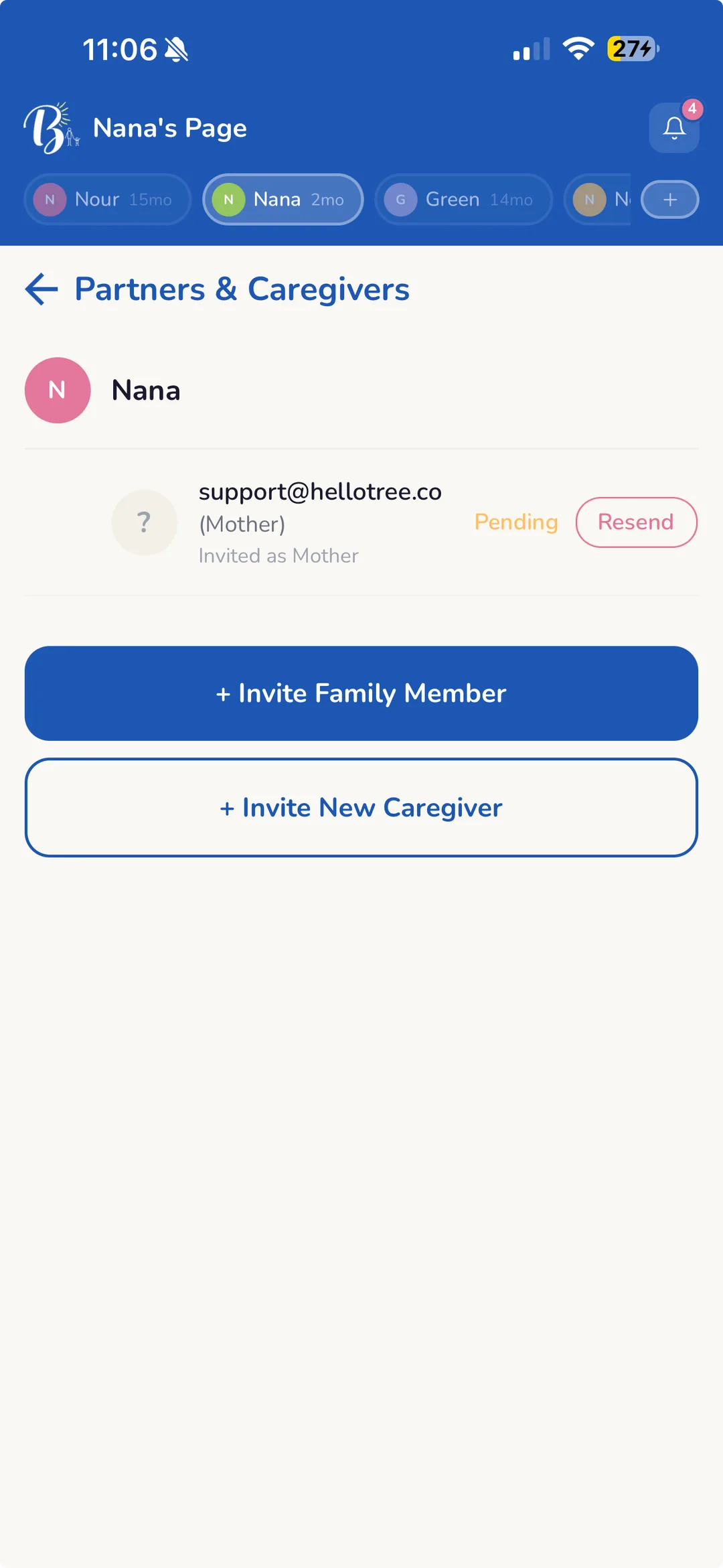
Your partner. Their grandmother. The childminder on Tuesdays. Everyone sees the same log and the same history — and accepting an invite never costs them anything.
- Partners, grandparents, caregivers
- One shared history per child
- Always free to accept